
Last updated October 31, 2026
 Kitchen remodeling
 Bathroom remodeling
 Home additions & ADU
 Roofing
 Windows & doors
 Driveway & pavers
 Fence
Free written scope consultation - allowances, timeline, and change-order rules on paper before a single trade is scheduled
General Contractor Troubleshooting: Common Problems and How to Fix Them
Walk through any Pacifica neighborhood mid-renovation and you’ll hear the same refrain: “The contractor ghosted us,” or “The tile’s been backordered for six weeks.” But here’s the counterintuitive truth we’ve learned from managing full-scope remodels along the coast: the most common reason a project goes 60 days over schedule isn’t bad workmanship. It’s a materials delivery gap that no single subcontractor owned, because nobody was responsible for the full supply chain. The electrician waits on the cabinet installer. The cabinet installer waits on the countertop fabricator. The countertop fabricator waits on a slab that was never ordered because the spec changed in week three and the change order didn’t trigger a reorder. This guide gives you a diagnostic framework for identifying which category your contractor problem falls into, what actually caused it, and the specific fix that matches the failure. Whether you’re mid-project and stalled, or planning a remodel and trying to avoid the trap entirely, you’ll leave with a clearer map than most homeowners ever get.
Styles & brands we work with
Quick Answer
Most general contractor problems fall into one of three categories: coordination failures (nobody owned the schedule between trades), specification failures (the contract or material spec was too vague to build from), or contractor performance failures (the GC isn’t executing on what was actually agreed). The fix is different for each: coordination failures get solved by installing a single point of accountability for the full supply chain; specification failures get solved by re-scoping with named brands and line-item detail; performance failures get solved through structured leverage at the contract stage you’re in. Knowing which category you’re dealing with tells you exactly who to call, what to document, and what remedy to pursue.
Table of Contents
- The Three-Category Diagnostic: Why Most “Contractor Problems” Aren’t What They Seem
- Coordination Failures: When Nobody Owns the Gap Between Trades
- Specification Failures: The Vague Bid That Becomes an Expensive Change Order
- Contractor Performance Failures: When the GC Isn’t Executing
- How to Audit a Stalled Project: Scope, Permits, and the Subcontractor Schedule
- Your Leverage Points at Each Contract Stage (Without Triggering a Dispute)
- Change Order Red Flags: Spotting Estimation Recovery Before You Pay for It
- How a Broad Material Network Reduces Substitution Risk
- Common Mistakes to Avoid
- When to Call a Professional
- Frequently Asked Questions
- The Bottom Line
The Three-Category Diagnostic: Why Most “Contractor Problems” Aren’t What They Seem
Before you fire anyone, file a complaint, or withhold a payment, you need to know what actually broke. In our experience managing remodels across Pacifica’s varied housing stock, from 1960s ranchers in Linda Mar to newer construction in the hills above Rockaway Beach, nearly every project friction point lands in one of three buckets. The fix is different for each, and applying the wrong fix makes the problem worse.
Category 1: Coordination failures. These feel like contractor problems but are actually system problems. Two trades show up on the same day and block each other. A window order sits in the manufacturer’s queue for eight weeks because nobody confirmed the lead time before the crew tore out the old frame. The tile installer finishes the shower pan and the plumber hasn’t roughed in the valve. No single person did bad work. The work just wasn’t sequenced, and sequencing is a general contractor’s core job.
Category 2: Specification failures. The bid said “mid-grade cabinets” or “standard quartz.” That’s not a specification. That’s a placeholder. Six weeks into the build, the homeowner discovers “mid-grade” means whatever the supplier had in stock, and the quartz they actually chose is a Level 4 slab that costs $35 more per square foot than the allowance. Now there’s a change order, a delay, and a relationship that’s curdling. The problem was never the contractor’s workmanship. It was a contract that didn’t specify enough.
Category 3: Contractor performance failures. This is the bucket homeowners think they’re in from day one, but it’s actually the least common. The GC agreed to a spec, sequenced the work, and still didn’t show up for two weeks. The framing is out of square. The waterproofing was skipped. The sub pulled off the job for a bigger project across town. This is a genuine performance problem, and the remedy is contractual, not conversational.
Here’s what matters: coordination failures and specification failures are preventable before they start. Performance failures are only fixable after they’ve happened. Most homeowners spend their energy reacting to the first two as if they were the third, which burns the relationship and leaves the actual bottleneck untouched. The rest of this guide shows you how to diagnose precisely and respond proportionally.
Coordination Failures: When Nobody Owns the Gap Between Trades
A full-scope remodel touches anywhere from 8 to 20 separate trades. Framing, rough plumbing, electrical, HVAC, drywall, tile, cabinetry, countertops, flooring, paint, finish trim, and often exterior work. Each trade has its own schedule, its own supplier, and its own lead times. Without a single entity managing the intersections, the project doesn’t just slow down. It stalls in unpredictable bursts that no amount of homeowner nagging can fix.
The signature of a coordination failure is simple: the work that’s done looks fine, but the project keeps waiting. You hear a lot of “we’re just waiting on X” with no owner for the waiting. In Pacifica, this gets amplified by two local realities. First, the coastal climate means exterior work (siding, roofing, windows) has a genuine weather window, and if the interior sequence isn’t aligned with the exterior sequence, you lose weeks to fog and rain delays. Second, many Pacifica homes are on sloped lots with limited staging space, so material deliveries have to be timed precisely. You can’t have pallets of James Hardie siding sitting in the driveway while the roofing crew needs the same square footage for their tear-off.
Here’s how to spot a coordination failure before it costs you a month:
- Ask who owns the sub schedule. A real general contractor can tell you, today, what each trade is doing this week and next week. If you’re getting vague answers, the schedule is aspirational, not operational.
- Check lead times before tear-out. Windows, custom cabinets, and engineered stone all have manufacturer lead times of 6 to 12 weeks. If the old kitchen is demolished before the new cabinets are in production, you’ve just created a coordination failure with a signed contract.
- Confirm material delivery dates in writing. Not “when it arrives.” The actual date from the supplier’s order confirmation. If your GC can’t produce that document for the critical path items, the supply chain isn’t being managed – it’s being hoped for.
- Look for a single point of accountability. One project lead who owns the sequence from foundation to roofline. Not a separate contact for each trade. That’s the coordination tax, and it’s exactly what homeowners hire a general contractor to eliminate.
The fix for a coordination failure is to reinstall accountability at the center of the project. That means getting the GC to produce a written trade schedule with dates, confirmed material lead times, and a critical path that shows which items gate which other items. If they can’t produce that after being asked directly, you’re not dealing with a coordination problem anymore. You’re dealing with a contractor who isn’t doing the coordination work, which slides the whole mess into the performance category.
This is also where the single-source model earns its keep. At Copperleaf Contractors home, we manage interior remodels, exterior systems, and hardscaping under one project team. The cabinet order, the window delivery, and the paver delivery are all coordinated through the same schedule. That’s not a convenience feature. It’s the difference between a project that finishes and a project that waits.
Specification Failures: The Vague Bid That Becomes an Expensive Change Order
The most expensive sentence in residential remodeling is “standard allowance included.” It appears in bids across Pacifica and the entire Bay Area, and it’s the root cause of a disproportionate share of mid-project disputes. An allowance is a placeholder, not a decision. When the contract doesn’t name the actual product, the homeowner is essentially agreeing to whatever gets selected later, under time pressure, usually after the framing is already up.
Here’s how the failure unfolds. The bid says “tile allowance: $4/sq ft.” The homeowner, reasonably, assumes that means the tile will cost $4/sq ft. What it actually means is that the contractor will credit you $4/sq ft against whatever tile you ultimately choose. If you choose a tile that costs $9/sq ft, you owe the difference. And here’s the trap: most homeowners don’t choose tile until week six of the build, by which point the budget is already committed elsewhere and the “choice” is between paying the overage or accepting whatever’s cheapest. That’s not a choice. That’s a hostage negotiation with your own contract.
Specification failures also show up in less obvious places:
- “Contractor-grade” anything. There’s no such manufacturer. There’s only the lowest price the supplier sells. If the bid doesn’t name a brand, it’s priced at the floor.
- Unspecified countertop material. “Quartz” spans a $45/sq ft to $120/sq ft range. Cambria, Silestone, and Caesarstone all make quartz. The contract needs to say which one, which color, and which edge profile.
- Vague window language. “New windows” doesn’t tell you the frame material, the glass package, the U-factor, or the manufacturer. Given Pacifica’s coastal exposure, the difference between a basic double-pane and a properly coated impact-resistant window from a manufacturer like PGT or Therma-Tru is material to both comfort and longevity.
- Unspecified waterproofing method. This one matters more than almost any other in a wet-area remodel. If the contract doesn’t name the waterproofing system (Schluter, for example), you’re trusting the installer’s personal preference, which varies wildly.
The fix is to kill the allowance language before you sign. Every material category that matters to you needs a named brand, a named product line, and ideally a color or finish selection. The bid doesn’t have to be finalized to the paint color, but it does need to be specific enough that there’s no ambiguity about what “the price” bought.
This is the practical advantage of working with a general contractor who carries a broad material network. With access to 50-plus vetted brands across cabinetry, countertops, plumbing fixtures, roofing, and windows, the conversation shifts from “what does the allowance cover?” to “which of these three Cambria colors do you want, and here’s the exact price difference.” Choice without a hidden margin. That’s the opposite of an allowance.
For homeowners planning a remodel in Pacifica, the pre-construction specification conversation is the single highest-leverage hour you’ll spend. It’s the difference between knowing what you’re buying and hoping the allowance holds.
Contractor Performance Failures: When the GC Isn’t Executing
Performance failures are the ones that justify legal remedies, but they’re also the ones homeowners misdiagnose constantly. A project that’s delayed because of a material lead time is not a performance failure. A project that’s delayed because the contractor took on three other jobs and pulled your crew is. The distinction matters because the remedy is different, and a homeowner who treats a coordination failure as a performance failure damages the relationship before the build is done.
Genuine performance failures have clear signatures. The work doesn’t match the agreed spec, even accounting for reasonable field adjustments. The crew doesn’t show up for days at a time with no explanation. The quality of the workmanship in week two is visibly different from the workmanship in week eight. The contractor asks for draws ahead of schedule or for work that hasn’t been completed. These are not process problems. These are execution problems.
When a performance failure appears, your leverage is the contract. Here’s the sequence that most reliably produces a fix without blowing up the project into a legal dispute that costs more than the problem:
- Document in writing. Not a phone call. An email that states, with specificity, what was agreed, what has been delivered, and what the gap is. Date it. Photos attached.
- Reference the specific contract provision. “Section 4, paragraph 2 states…” This signals that you’ve read the document and you’re operating from it, not from emotion.
- Request a corrective plan with a date. “Please provide, by Friday, a written plan for completing X, including the date the crew will return and the materials that have been ordered.”
- Pause the next draw. Not withhold it indefinitely, which can trigger breach on your side. But pause it with a written explanation tied to incomplete scope. That’s the single most effective leverage a homeowner has in a mid-build dispute.
- Escalate to the licensing board only if the above fails. The California Contractors State License Board takes documented complaints seriously, but it’s a slow process. You want the project back on the rails, not a four-month review of a complaint.
In Pacifica, where many homes are older and the renovation market is competitive, the contractor’s local reputation is a real asset and a real vulnerability. A documented, specific, contractually grounded complaint is far more effective than a general “we’re unhappy” email. Be the homeowner who writes like they might file. You rarely have to actually file.
How to Audit a Stalled Project: Scope, Permits, and the Subcontractor Schedule
When a remodel stalls, the homeowner’s instinct is to call the contractor and ask “what’s going on?” The better move is to audit first, then call with specifics. A stalled project always has a bottleneck, and the bottleneck almost always lives in one of three places: the original scope, the permit status, or the subcontractor schedule. Here’s how to find it.
Step 1: Re-read the original scope and compare it line-by-line against what’s been done. Pull out the contract and honestly assess completion. Not “the kitchen feels 70% done.” Line by line: cabinets installed? Countertops templated? Plumbing roughed in? Electrical finaled? For each incomplete line, note what’s blocking it. That blocker is the bottleneck.
Step 2: Check permit status with the Pacifica Building Department. Many Pacifica remodels require coastal zone review, which adds lead time that’s invisible to the homeowner but very visible to the inspector. If the permit is stuck in review, the project is stalled by the city, not by the contractor. That’s a coordination problem with the jurisdiction, not a performance problem with the GC. Conversely, if the contractor started work without the permit and the inspector flagged it, that IS a performance problem.
Step 3: Request the subcontractor schedule with confirmed dates. Not the contractor’s memory. The actual schedule with trades named, dates booked, and material arrival dates confirmed by the supplier. If the GC can’t produce that, the project doesn’t have a schedule. It has a wishlist.
Step 4: Identify the single critical path item that gates everything else. Usually it’s one of: custom cabinetry, a specific window package, an engineered stone slab, or a permit approval. Everything downstream waits on that item. Once you’ve identified it, you can have a precise conversation: “The Cambria order was confirmed for delivery on the 14th. The template is scheduled for the 18th. The install for the 21st. What happened to the confirmation?”
This audit takes an hour and it transforms the conversation from emotional to operational. Most stalled projects in Pacifica stall because one material delivery slipped and nobody adjusted the downstream sequence. The homeowner who can identify that specific slip is far more likely to get a specific fix.
Your Leverage Points at Each Contract Stage (Without Triggering a Dispute)
Homeowners have real, practical leverage at every stage of a remodel. The key is knowing which lever to pull at which stage, and understanding that the goal is a finished project at the agreed price, not a confrontation. Here’s the map.
Pre-construction: the leverage is your signature. Before you sign, you can change the spec, replace the allowance language, demand named brands, require a written trade schedule, and negotiate anything. Once you sign, you can’t. This is the moment to be exhaustive. Ask for the line-item spec. If the contractor balks at naming the window manufacturer or the countertop line, that’s information. “Your remodel, your material choices” isn’t a slogan. It’s a contractual position.
Mid-build: the leverage is the draw schedule. You don’t pay the next draw until the previous scope is complete. That’s between you and the contract. If the work is incomplete, you pause the draw with written documentation. You’re not refusing to pay. You’re following the payment terms. That distinction keeps you on the right side of the contract while applying genuine pressure.
Punch list: the leverage is the retainage. Most well-structured contracts hold 5% to 10% until the punch list is complete. Don’t release it early out of enthusiasm for the finished space. Walk the project with the GC. Write down every item. Agree on a completion date. Then release the retainage when the list is done.
The through-line here is documentation. Leverage without a paper trail is just argument. With a paper trail, it’s a contract. Every significant conversation should be followed by a brief email summarizing what was agreed. That’s not adversarial. It’s professional. And it’s the thing that most easily separates a stalled project from a completed one.
If you’re planning a home remodeling project in Pacifica, this framework applies from the first bid through the final walk-through. The contract is the tool. Learn to use it.
Change Order Red Flags: Spotting Estimation Recovery Before You Pay for It
Change orders are a normal part of residential remodeling. The house has surprises behind the walls, the homeowner changes their mind about the tile, the city inspector requires an upgrade not in the original scope. A healthy change order is a specific response to a specific condition, priced transparently. An unhealthy change order is a contractor recovering their own bid mistake by hiding it in the legitimate changes. Here’s how to tell the difference.
Red flag 1: The change order doesn’t reference the original contract line item. Legitimate changes flow from a specific scope item: “The original bid assumed standard drywall. The approved plan calls for moisture-resistant board in the bathroom. This change order covers the difference.” If the change order references vague conditions with no tie to the contract, ask what changed between bid and build.
Red flag 2: The pricing is a lump sum with no labor/materials split. Legitimate change orders break out what the materials cost, what the labor costs, and what the markup is. A single number with no breakdown is a markup hiding in the dark.
Red flag 3: The timing is suspiciously clustered. Three change orders in one week, all small, all vague, all arriving mid-build, often signal that the GC is trying to true up their original bid. One change order for the plumbing upgrade you actually requested is normal. Four change orders for “field conditions” in the same week is not.
Red flag 4: The change order covers work that was visibly included in the original scope. If you can point to the original plan and see the work already specified, don’t sign the change order. Send the plan back with a note. “This item appears in the original scope, section 3.2. Please reconcile.”
Red flag 5: The change order is presented as urgent. “I need this signed today to lock in the pricing.” No legitimate change order on a residential remodel has same-day urgency. If it’s urgent, it’s pressure. Take 48 hours and read it.
The broader structural defense against change-order abuse is the same defense that works against specification failures: name the materials in the original contract. A GC who carries access to competing brands across every category, from cabinetry (KraftMaid, Wellborn) to countertops (Cambria, Silestone) to plumbing fixtures (Kohler, Moen, Toto), has no need to hide margin in change orders. The price is in the spec. When the spec is specific, the change order is honest, because there’s nowhere for the error to hide.
How a Broad Material Network Reduces Substitution Risk
Substitution risk is the quiet killer of mid-project satisfaction. The homeowner selected a specific tile, a specific faucet, a specific window. Then the lead time slipped, or the line was discontinued, or the supplier ran out. The contractor offers a “comparable” substitute. In practice, “comparable” usually means “available,” and the homeowner is left choosing between accepting a product they didn’t select or stalling the project for eight more weeks.
This is a standard failure mode in residential remodeling, and the root cause is a narrow material network. When a contractor works with two or three suppliers, substitution is their only move when the supply chain hiccups. When a contractor works across 50-plus vetted brands, substitution becomes a genuine choice, not a default.
Here’s the practical difference. A Pacifica homeowner wants Coastal Oak cabinetry with a specific finish. The manufacturer’s lead time jumps from 6 weeks to 14 weeks. A narrow-network contractor says: “We’ll have to go with a similar cabinet from a different maker, we’ll let you know what’s available.” A broad-network contractor says: “KraftMaid has an equivalent line with a 7-week lead, Wellborn can do it in 9. Here are photos of both. Which do you want?” Same schedule recovery, completely different homeowner experience.
The same dynamic applies to windows, where Pacifica’s coastal exposure makes glass package and frame material decisions more consequential than they are inland. A contractor with access to multiple window manufacturers can actually respond to a lead-time problem with options. A contractor locked into one brand can’t.
This is the practical meaning of “choose the material, not the markup.” If your contractor’s entire material universe is one brand per category, you’re not choosing. You’re accepting. The width of the network is the width of your actual options. That’s true before the project starts, and it’s twice as true when the supply chain disrupts mid-build.
For a home renovation in Pacifica, substitution risk is real. The coastal climate means exterior materials take a beating, and the wrong substitute on a window package or a siding product isn’t just a cosmetic disappointment. It’s a durability issue. The network matters.
Common Mistakes to Avoid
- Signing a bid with “allowance” language. An allowance is a placeholder for a price you haven’t agreed to. Replace every allowance with a named product and an actual price before you sign.
- Hiring the GC who promises the fastest start date. Pacifica’s renovation market is competitive, and the contractor who can start next week probably can start next week because they don’t have any other work. That’s not availability. That’s a signal.
- Not checking permit status before construction begins. Pacifica’s coastal zone adds review time to some permits. If the contractor starts without an approved permit, the problem lands on you as the property owner.
- Paying for the whole project upfront. A legitimate draw schedule ties payments to completed scope. Anyone asking for full payment before work begins is a red flag in any city, Pacifica included.
- Having casual conversations and calling them agreements. “We talked about that” is not a contract. Follow up every meaningful conversation with a written summary. It’s the cheapest insurance in remodeling.
- Choosing materials long after the build has started. The tile, the faucets, the countertop, the cabinet hardware: have them selected before the first wall comes down. Post-demo selection is how projects stall and budgets blow.
- Assuming “full-service” means the same thing to every contractor. Ask what’s actually under the GC’s management. If the windows are subbed through a separate contract and the hardscaping is a different crew with a different schedule, that’s not full-scope. That’s a coordination tax in disguise.
When to Call a Professional
Some contractor problems you can solve with a well-documented email and a close read of the contract. Others require a professional who can step in mid-project, audit the scope, and re-sequence the work. Call a general contractor if your project has been stalled for more than two weeks with no documented material delay, if the workmanship fails inspection and the current contractor isn’t responding to written notice, or if you’ve reached the point where the relationship has broken down and you need a neutral party to assess the actual state of the build. If you’re planning a remodel and want to avoid the failure modes in this guide from the start, the conversation is even simpler. Copperleaf Contractors in Pacifica offers free estimates. Call (833) 589-8173 to schedule yours.
Frequently Asked Questions
The cost depends entirely on what stalled it. If the issue is a material lead time, the fix is often just re-sequencing the remaining trades, which a competent GC can do without new cost. If the issue is a change order caused by a vague spec, the cost is the difference between what you thought you bought and what you’re actually buying, which can range from a few hundred dollars to several thousand. If the issue is a performance failure requiring a new contractor to take over, expect to pay a re-mobilization premium of 10% to 15% over the remaining scope. Call (833) 589-8173 for an exact assessment. Estimates are free.
It depends on the contract, but the most common reason prices change mid-build is that the original bid contained allowances or vague specs that resolved into higher-cost selections later. A contract with named products and line-item pricing should hold steady unless you approve a change. If you’re seeing unexpected change orders, the problem is usually in the original document, not the work. Call (833) 589-8173 before you sign to review your bid.
Yes. A general contractor in Pacifica pulls the permits and manages the inspection schedule as part of the project scope. The homeowner owns the property, but the GC is responsible for building to code and passing inspections. If your current contractor is building without permits, that’s a performance failure and a liability exposure for you as the property owner.
A full-scope remodel in Pacifica typically runs 4 to 8 months depending on scope, but the honest answer is that the schedule is only as good as the material lead times and the permit review status. A written trade schedule with confirmed delivery dates is the best predictor. If your contractor can’t produce one, the schedule is a guess. Call (833) 589-8173 for a realistic timeline based on your actual scope.
It depends on the project, but in most cases the answer is that it creates more coordination risk than it saves. The material network a GC brings isn’t just a price list. It’s the supply chain management, the lead time tracking, and the substitution options when a manufacturer slips. If you’re asking because you want a specific product, say so. A good GC can source from manufacturers like Therma-Tru, ES Windows, or ECO Window Systems and put the spec in the contract. That’s different from handing the coordination burden back to you.
Send a written email referencing the contract and requesting a written corrective plan with dates. That’s the first step. If you get no response within a week, the next step is to pause the draw and consider having another general contractor audit the project. You’re not obligated to stay in a relationship that’s no longer performing, but you do need documentation to make the transition cleanly. Call (833) 589-8173 if you’re in this situation now and need a realistic assessment of where the project stands.
The Bottom Line
Most general contractor problems are not what they look like from the homeowner’s side of the fence. A stalled project is usually a supply chain gap with no owner, not a lazy crew. A surprising change order is usually a vague spec from the original bid, not a dishonest upcharge. And a broken relationship is usually the accumulated weight of both, left unresolved too long. The fix starts with accurate diagnosis: coordination, specification, or performance. Once you know which bucket you’re in, the remedy is knowable. The best time to apply this framework is before you sign the contract. The second-best time is the moment the project starts to drift. Either way, the answer isn’t more phone calls or more patience. It’s a specific question, asked in writing, about who owns the gap.
Written by the team at Copperleaf Contractors, serving Pacifica since 2017.
See the difference
 Before
 After
 Before
 After
 Before
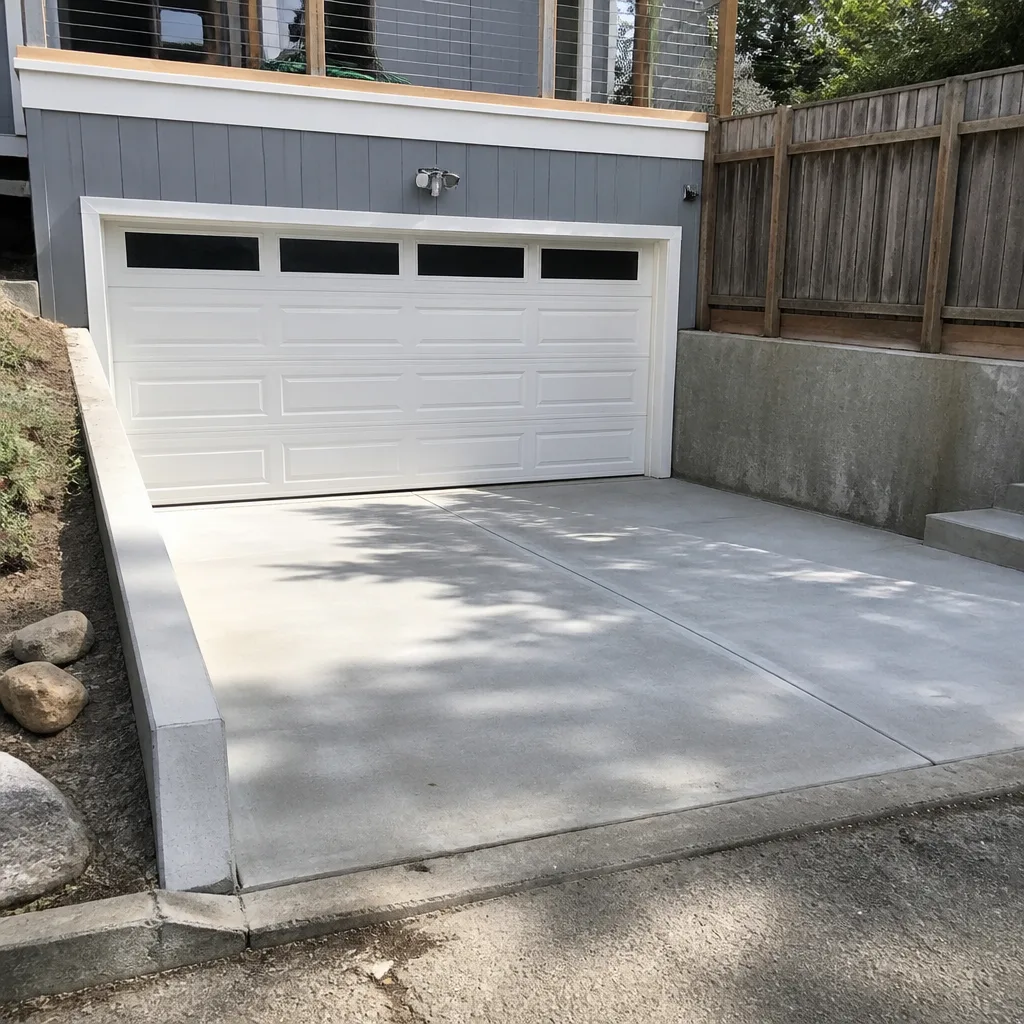 After