
Last updated October 31, 2026
 Home additions & ADU
 Kitchen remodeling
 Bathroom remodeling
 Roofing
 Windows & doors
 Driveway & pavers
 Fence
Free written scope consultation - allowances, timeline, and change-order rules on paper before a single trade is scheduled
Construction Warning Signs: A Pacifica Homeowner’s Reference Guide
White crystalline deposits on a Pacifica home’s foundation are not mold. They’re efflorescence, a sign of chronic water infiltration migrating through concrete that often goes ignored for years until structural remediation becomes unavoidable. This guide will teach you to read the specific failure patterns that salt air, fog, and hillside drainage create in Pacifica construction. You’ll learn how to distinguish normal coastal weathering from active deterioration, which warning signs demand immediate professional attention, and how deferred maintenance compounds in wet, marine environments faster than any generic home inspection guide suggests.
Quick Answer
Construction warning signs in Pacifica, CA fall into predictable coastal patterns: efflorescence on foundation walls, corrosion staining around fasteners, paint failure that indicates moisture system problems, deck ledger board separation, and retaining wall cracking from drainage failure. Most homeowners misread these as cosmetic issues when they’re early indicators of water intrusion that will compromise structural sheathing within two wet seasons if untreated, as covered in our General Contractor Troubleshooting: Common Problems and How to Fix Them.
Styles & brands we work with
Table of Contents
- Reading Efflorescence: What Your Foundation Is Telling You
- Corrosion Staining: When Fasteners Become Failure Points
- Paint Failure as a Moisture Diagnostic, Not a Cosmetic Problem
- Window and Door Assemblies: Coastal Weathering vs. Active Intrusion
- Deck and Balcony Warning Signs in Salt-Air Environments
- Hillside Retaining Walls: Cracking Patterns and Drainage Failure
- The Compounding Risk of Deferred Coastal Repairs
Reading Efflorescence: What Your Foundation Is Telling You
Efflorescence appears as a white, chalky deposit on concrete foundation walls, retaining walls, and sometimes on interior basement surfaces. It forms when water moves through concrete, dissolving soluble salts within the material, then evaporates at the surface and leaves those salts behind. In Pacifica, where fog saturates exterior surfaces for hours daily and seasonal rainfall pushes groundwater against foundation walls, efflorescence is common. What matters is not whether it appears, but whether it recurs after cleaning and whether it’s accompanied by other indicators.
Light, powdery efflorescence that appears once and wipes away easily is often the result of initial concrete curing or a single water event. The problematic pattern is crystalline, crusty, and recurring. When you remove it and it returns within weeks, you have active water movement through the wall, not residual moisture from construction. That movement is carrying dissolved minerals from inside the concrete, which means the concrete’s internal structure is slowly being depleted. Over years, this weakens the material and creates pathways for further water penetration.
We’ve seen Pacifica hillside homes where efflorescence on a retaining wall was painted over repeatedly for a decade while the wall’s drainage system remained clogged. By the time the wall showed visible bowing, the repair required partial reconstruction rather than drainage correction. The efflorescence was never the problem. It was the earliest visible signal of the actual problem.
What to check when you see efflorescence:
- Location pattern: Efflorescence concentrated at the bottom third of a wall suggests groundwater wicking upward. Even distribution suggests surface water penetration.
- Texture: Powdery deposits are less concerning than hard, crystalline crusts, which indicate long-term active water movement.
- Accompanying signs: Look for spalling concrete, cracking, or a musty odor inside the adjacent space. These confirm water intrusion is ongoing.
- Recurrence timeline: Clean the area and monitor. Reappearance within 30 to 60 days means active infiltration requiring drainage correction.
Pacifica’s coastal climate accelerates efflorescence cycles because the concrete never fully dries. Fog keeps surfaces damp even during dry summer weeks, so the evaporation rate that drives salt deposits stays elevated. If you see efflorescence paired with horizontal cracking in a foundation wall, that’s a structural concern requiring a professional assessment. A General Contractor in Pacifica can evaluate whether drainage correction, waterproofing, or wall reinforcement is required before the damage progresses.
Corrosion Staining: When Fasteners Become Failure Points
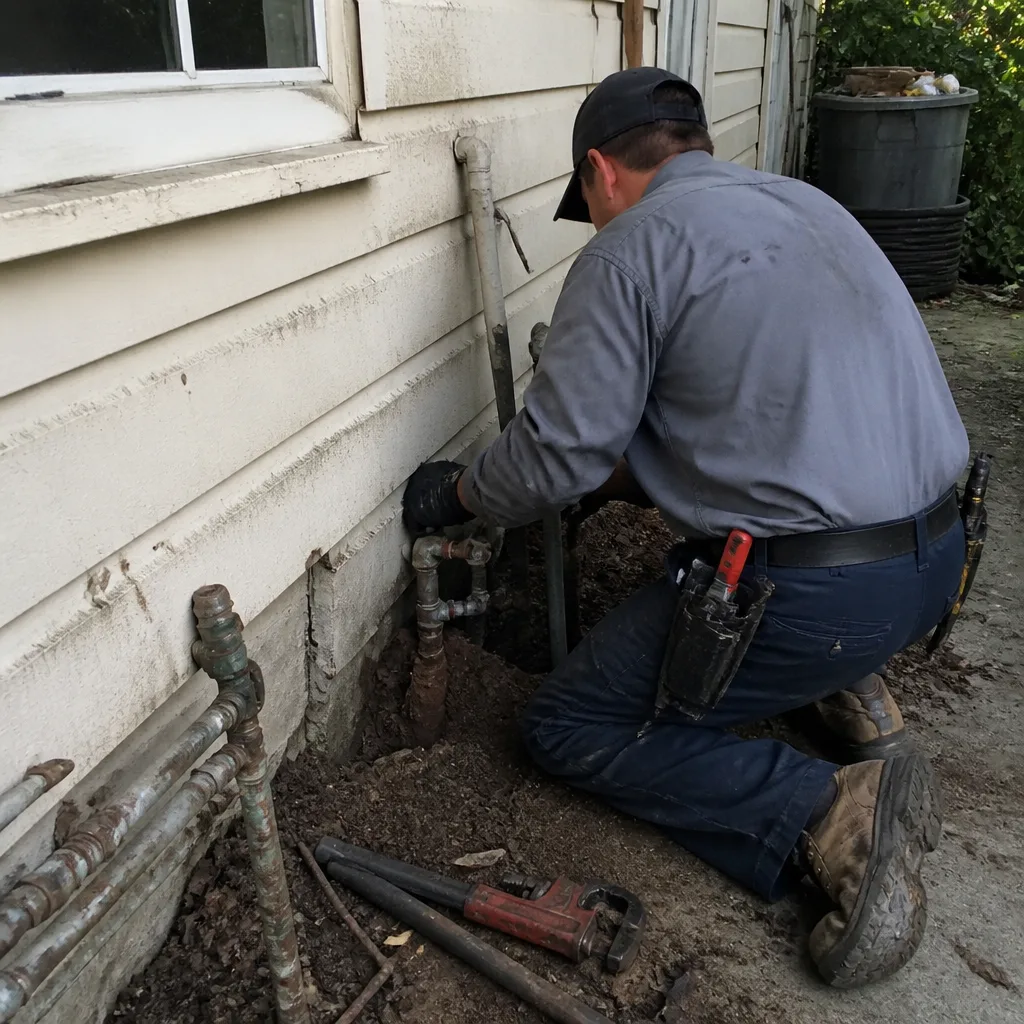
Rust-colored streaks running downward from nail heads, screws, bolts, or metal brackets are corrosion staining. The fastener is oxidizing, and the stain is the oxidized metal being washed across the surface by moisture. In Pacifica, this happens faster than inland because salt-laden fog deposits chlorides on metal surfaces, accelerating the electrochemical reaction that causes rust. What looks like a cosmetic stain is actually evidence that the fastener is losing cross-sectional area and becoming structurally compromised.
For most load-bearing connections, a fastener that shows visible corrosion staining on the surface has likely lost 10 to 15 percent of its original diameter internally. In deck connections, railing brackets, and structural hardware, that reduction matters. A corroded joist hanger that fails under load does not bend gradually. It snaps. Corrosion is a progressive, invisible-to-the-eye weakening until sudden failure occurs.
Specific corrosion patterns to watch for in Pacifica:
- Staining at galvanized nail heads in siding and trim: This indicates the zinc coating has been consumed and the underlying steel is oxidizing. The fastener is no longer protected and will continue to degrade.
- Rust weeping from behind exterior cladding: This suggests hidden flashing failure. Water is reaching the fastener from behind, which means the water management system is compromised, not just the fastener.
- Corrosion at deck post anchors and hold-downs: These are safety-critical connections. Staining here, especially near the base where salt spray accumulates, warrants immediate inspection.
- Discoloration around window and door hardware screws: Coastal moisture is reaching the hardware through the assembly, which means the installation’s waterproofing layers may be failing.
When rust staining appears on any fastener that holds something up or holds something back, it’s no longer a question of appearance. The question is whether the steel has enough remaining capacity to do its job. At Copperleaf Contractors home, we spec stainless or high-grade coated fasteners on exterior applications in Pacifica because the marine environment consumes standard galvanized products years faster than manufacturer warranties anticipate. For existing structures, an inspection of fastener condition is part of any exterior renovation we undertake.
Paint Failure as a Moisture Diagnostic, Not a Cosmetic Problem
Paint does not fail randomly. When exterior paint blisters, peels, or bubbles in specific patterns, it’s usually reporting a moisture problem beneath or behind the coating. In Pacifica, where average humidity runs high and fog is a daily reality for much of the year, paint failure often reads differently than it would in Sacramento or San Jose. The peeling you see on a Pacifica home is frequently a symptom of water that has already entered the wall assembly.
Three failure patterns that indicate active water intrusion rather than normal weathering:
- Blistering with visible moisture: Small raised bubbles in the paint film, especially on south and west-facing walls that receive prevailing wind-driven fog, suggest water is trapped behind the coating. Press on a blister. If moisture appears, water is moving through the cladding.
- Peeling in vertical streaks below windows or rooflines: This pattern tracks water flow. The paint is failing where water has been channeled, which means the flashing or weatherproofing above is not directing water away properly.
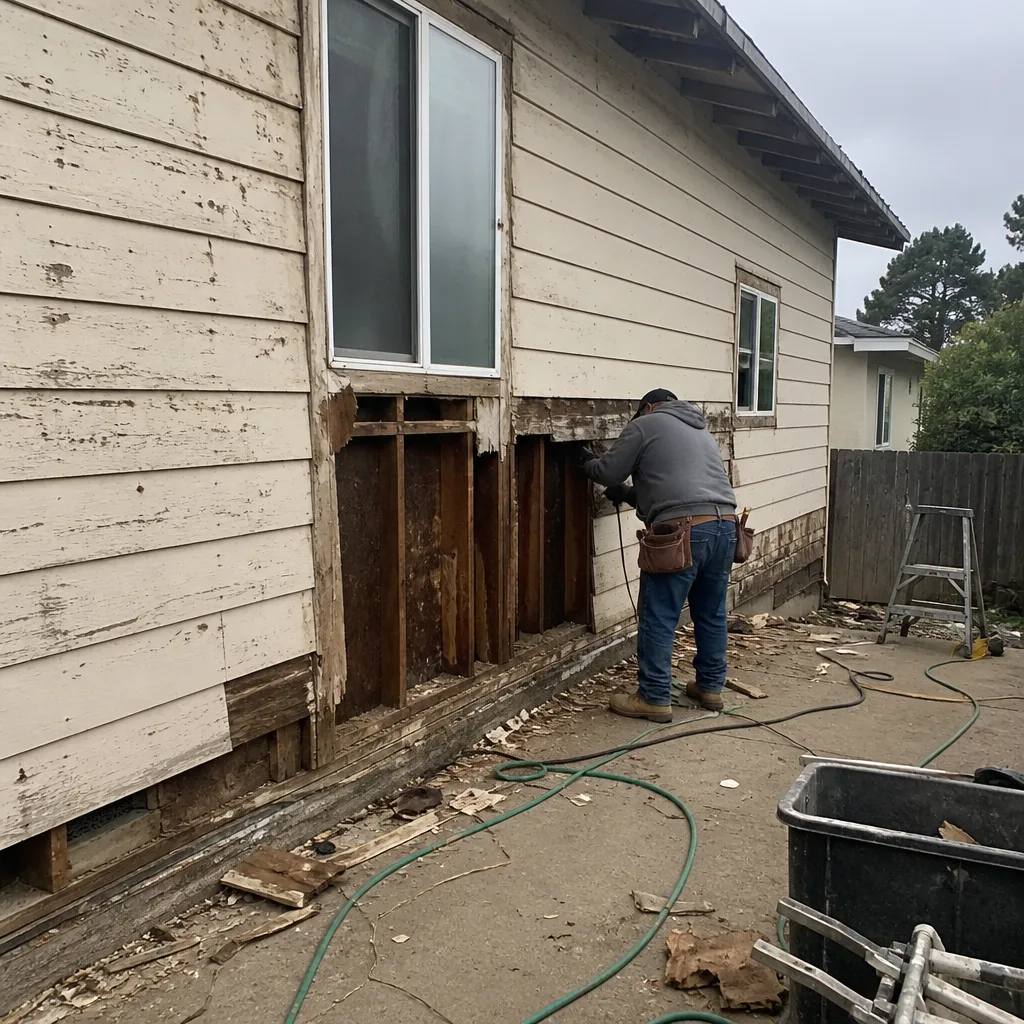
- Chalking with underlying substrate erosion: Heavy chalking is normal UV degradation. But when chalking is accompanied by soft, friable wood or crumbling stucco beneath, moisture has been soaking into the substrate, not just degrading the paint film.
Coastal salt deposition complicates paint failure in Pacifica. Salt crystals are hygroscopic, meaning they attract and hold moisture. When salt accumulates on painted surfaces, it pulls water into the paint film and can drive premature adhesion failure. A Pacifica home one mile from the ocean will show paint degradation years earlier than an identical home in Linda Mar or Park Pacifica’s higher elevations, not because the paint is different but because the salt loading is different.
If you’re planning to repaint, and the previous coating failed within five years, the problem is not the paint. The problem is water. A full-scope Home Remodeling in Pacifica approach evaluates the wall assembly, flashing, and drainage plane before any new coating goes on. Painting over an active moisture problem buys one or two dry seasons of appearance, and then the failure returns with the underlying wood further damaged.
Window and Door Assemblies: Coastal Weathering vs. Active Intrusion
Windows and doors on a Pacifica home face relentless exposure. Salt-laden fog, wind-driven rain, and UV saturation all attack the sealants, gaskets, and flashing systems. The challenge is that normal weathering and active intrusion can look similar to an untrained eye. Both cause staining, sealant cracks, and frame discoloration. The difference matters because one is cosmetic aging and the other means water is entering the wall cavity.
Here’s how to distinguish the two:
- Check the interior perimeter: Active intrusion eventually shows up inside. Look for water stains on drywall below and beside window corners, soft spots around trim, or paint bubbling on interior surfaces. If the interior is dry after heavy rain, you likely have surface weathering, not active leaks.
- Probe the exterior sealant: Weathering sealant gets chalky and hard but remains attached to both surfaces. Failing sealant pulls away from the window frame or the siding, leaving a gap. Press gently with a fingernail. If the sealant flexes and stays attached, it’s aging. If it separates, water has a pathway.
- Look for dirt trails below suspected openings: When water runs through a gap, it carries dust and debris, leaving visible trail lines on the surface below. A clean gap with no trailing stains has not yet carried significant water.
- Examine hardware corrosion: Interior hardware rust on a closed-up home indicates high humidity or water entry. Exterior hardware rust is expected in Pacifica. The meaningful signal is corrosion on the interior side, where it should be protected.
Pacific’s marine environment accelerates sealant degradation. Products rated for 20 years in inland climates often show meaningful cracking in 10 to 12 here. The expansion and contraction cycle alone is not the problem. It’s the salt, which embrittles polymer sealants and breaks the adhesion bond faster. When we replace windows or repair exterior assemblies, we select systems rated for coastal exposure, often from manufacturers like PGT and CGI, whose products are engineered specifically for high-wind, salt-air environments.
For homeowners assessing whether their window problem is weather or water, the deciding test is moisture intrusion after rain. Open the wall cavity around a suspect window during a late-fall or winter storm season. If the sheathing is damp, the issue is active and needs addressing. If it’s dry, plan for maintenance replacement on your timeline. A Home Renovation in Pacifica evaluation can pinpoint where water is entering and whether the damage is cosmetic or structural.
Deck and Balcony Warning Signs in Salt-Air Environments
Pacifica decks and balconies live in one of the most aggressive environments for wood and metal fasteners in the Bay Area. Salt fog condenses on surfaces daily, carrying chlorides into every joint, crack, and connection. The failure patterns that emerge are predictable and, more importantly, preventable if caught at the right stage. What makes Pacifica different from inland decks is the rate of deterioration. A deck that would last 20 years in Mountain View may need significant fastener replacement at year 12 in Pacifica, and the difference is entirely environmental.
Key warning signs specific to salt-air deck environments:
- Ledger board separation: The ledger board is the horizontal member that attaches the deck to the house. Look for a visible gap between the ledger and the exterior wall, or between the ledger and the deck joists. This separation means the mechanical fasteners are corroding or the wood is compressing from moisture cycling. In Pacifica, ledger fasteners corrode from the inside out, so the first visible sign is often a slight sag at the deck edge nearest the house.
- Post base corrosion: Deck posts sit in metal base brackets that are constantly exposed to salt moisture pooling. Rust staining on the bracket, flaking metal, or any visible section loss means the post’s load path is compromised. A post base that has lost 30 percent of its steel can still look serviceable while its safety factor is gone.
- Decking cupping patterns: Wood decking cups when the top surface shrinks relative to the bottom surface. In Pacifica, the top is repeatedly wetted by fog and dried by sun, while the underside stays drier. Cupped boards look concave from above and hold water, which accelerates decay. Cupping is not just a tripping hazard. It’s evidence that the decking material is not appropriate for the microclimate or that the finish has failed, allowing moisture cycling.
- Red rust at joist hangers and structural brackets: The same corrosion staining discussed earlier applies here, but the stakes are higher. Deck structural hardware is load-bearing in a way wall siding fasteners are not. Any rust staining on a joist hanger in Pacifica should be evaluated by a structural professional.
- Vertical cracks at regular intervals: These are often shrinkage cracks from concrete curing or minor thermal movement. If they’re hairline, under 1/16 inch, and not widening, they’re generally stable. If they’re wider than 1/8 inch or open up during wet weather and close during dry periods, the wall is flexing under soil pressure changes. That flexure indicates improper drainage behind the wall.
- Horizontal cracks or stair-step cracks along mortar joints: Horizontal cracking in a concrete retaining wall, or stair-step cracking in a masonry wall, indicates the wall is moving. Soil pressure behind the wall is exceeding the wall’s capacity. The most common cause in Pacifica is failed or absent drainage behind the wall. When water builds up in the soil, it creates hydrostatic pressure that pushes the wall outward.
- Efflorescence concentrated behind or below weep holes: Water is moving through the wall, not draining properly.
- Soil staining or erosion at wall corners: Water is eroding material around the structure.
- Wall bowing visible along its length: The wall is flexing under hydrostatic pressure.
- Weep holes that remain dry after heavy rain: They’re clogged or inadequate. Water is building up behind the wall.
- Year one: Water enters around the window during winter storms. The sheathing around the opening gets wet. Interior drywall shows a faint stain that most homeowners don’t notice or dismiss.
- Year two: The wet sheathing never fully dries. Mold begins to grow in the wall cavity. The window’s rough opening framing starts to soften. The interior stain grows. The homeowner paints over it.
- Year three: The window starts to feel loose. Cracks appear in the exterior stucco or siding around the opening. The structural connection between window and framing is compromised. The repair now requires removing the window, cutting out and replacing rotted framing, replacing sheathing, and possibly addressing mold remediation.
We’ve inspected Pacifica decks where the decking surface looked presentable but the structural connections underneath had lost significant metal. Salt fog penetrates the gaps between boards and attacks hardware from above, while ground-level humidity attacks from below. The deck surface can be misleading. The real condition is underneath. For decks approaching or past 15 years in a coastal Pacifica location, a structural inspection is not optional. It’s the difference between a fastener replacement project and a full rebuild after a failure.
Hillside Retaining Walls: Cracking Patterns and Drainage Failure
Pacifica’s hillside neighborhoods, from Pedro Point to the ridges above Linda Mar, rely heavily on retaining walls to create buildable sites and hold back slopes. These walls fail in predictable ways, and the cracking patterns tell a specific story. Reading that story correctly determines whether you need a simple drainage correction or a full wall reconstruction.
Two major cracking patterns and what they mean:
Drainage is the root cause of most Pacifica retaining wall problems. The slopes here are steep, the soil is often clay-heavy, and seasonal rainfall is substantial. A properly built retaining wall includes a drainage system: gravel backfill, a perforated drain pipe, and weep holes that allow water to escape. When that system clogs or was never installed correctly, water pressure builds and the wall moves.
Signs that drainage failure is driving wall movement:
The decision point for retaining wall repair in Pacifica depends on wall height, structural condition, and the cost of reconstruction versus drainage correction. A wall showing early bowing with functioning drainage may be salvageable with anchors and drain improvements. A wall with horizontal cracking, significant bowing, and failed drainage often requires partial or full rebuild. The earlier the problem is identified, the more options remain available. Once a wall has moved more than a few inches, the structure’s soil bearing capacity is compromised and reconstruction becomes more complex.
The Compounding Risk of Deferred Coastal Repairs
Deferred maintenance on any home costs more. But in Pacifica, the multiplication factor is higher because marine moisture accelerates decay between the time a problem appears and the time it’s addressed, which is why a General Contractor Maintenance Checklist for Pacifica Homeowners is essential. A minor cladding failure that might remain stable for five years in an inland climate becomes a sheathing replacement in two wet seasons here. The window between noticing a problem and structural consequence is shorter, and the repair scope grows faster.
Here’s the mechanism: once water breaches the exterior envelope of a Pacifica home, it encounters a wall cavity filled with moist, salt-laden air. Wood sheathing in this environment does not dry out between wetting cycles. Fog keeps relative humidity high even when it’s not raining. So the sheathing stays wet, mold and decay organisms thrive, and the structural fasteners corrode faster. What started as a failed paint film becomes rotted sheathing, which becomes rusted framing connectors, which becomes a wall reconstruction requiring scaffolding, engineering, and significant expense.
Coastal deferred repair also compounds across adjacent systems. Consider a window flashing failure on a Pacifica home:
That entire progression could have been stopped at year one with a flashing repair that cost a few hundred dollars. Deferred into year three, the repair is a multi-thousand-dollar structural remediation project. The coastal environment imposes this acceleration on every exterior system, from roofing to decks to cladding.
Common Mistakes to Avoid
- Painting over efflorescence: Paint will not bond to efflorescence and the moisture will continue moving through the wall, pushing the paint off and degrading the concrete. Remove the water source first, then clean and seal.
- Caulking over failing sealant without removing the old material: New caulk over old, embrittled sealant creates a sandwich that fails within months. Full removal and reapplication is required, using a product rated for coastal conditions.
- Using standard galvanized fasteners for exterior repairs in Pacifica: Standard galvanized coating is consumed quickly in salt air. Stainless steel or heavy hot-dip galvanized fasteners are warranted for long-term exterior applications.
- Ignoring rust staining on structural hardware: Rust staining on deck brackets, joist hangers, or post bases is a structural warning, not a cosmetic blemish. The steel is actively degrading while it continues to carry load.
- Sealing wall cracks without checking drainage first: Cracks in retaining walls are often symptoms of drainage failure. Sealing the cracks traps water behind the wall and accelerates the pressure buildup that caused the cracking.
- Assuming a new paint job will fix the problem: When paint fails early, the problem is water, not coating. A new paint job over an untreated moisture issue is a temporary cosmetic fix that allows concealed decay to continue.
- Waiting for visible interior damage to act: By the time water stains appear on interior drywall in Pacifica, the wall cavity has likely been wet for months. Acting on exterior warning signs prevents interior damage and the repairs become much more manageable.
See the difference
 Before
 After
 Before
 After
 Before
 After
When to Call a Professional
Any structural warning sign in Pacifica deserves a professional assessment. Specifically, call a licensed contractor when you see: efflorescence that returns within weeks of cleaning, rust staining on load-bearing hardware, paint failure paired with soft or damp substrate, ledger board separation on a deck, horizontal cracking in a retaining wall, or any window or door that shows interior water staining. These are not DIY vs Professional Construction: The Pacifica Homeowner’s Decision Guide material. They require experience reading coastal deterioration patterns and understanding how the home’s systems interact. Copperleaf Contractors offers free estimates in Pacifica – call (833) 589-8173 to schedule an evaluation of any warning sign discussed in this guide. We’ll tell you what the problem actually is, what it will take to fix it, and what it will cost.
Frequently Asked Questions
The most common construction warning signs in Pacifica homes are efflorescence on foundations, corrosion staining around fasteners, early paint failure, window and door sealant breakdown, deck ledger separation, and retaining wall cracking from drainage failure. These patterns appear more frequently in Pacifica than inland because salt fog and high humidity accelerate deterioration of both structural metals and exterior coatings. Most of these signs first appear as cosmetic issues and are ignored until the underlying structural problem has progressed.
Efflorescence is serious if it recurs within 30 to 60 days of cleaning, if it has a hard crystalline texture rather than a powdery one, or if it’s accompanied by cracking, spalling, or interior musty odors. Recurring efflorescence means active water movement through the concrete, which will continue to degrade the material over time. In Pacifica, coastal moisture keeps the concrete damp, so efflorescence cycles repeat faster than in dryer climates. Call (833) 589-8173 for a free assessment if you’re seeing recurring white deposits on your foundation.
Rust staining around window fasteners means the fastener’s protective zinc coating has been consumed and the underlying steel is oxidizing. In a Pacifica coastal environment, this happens faster because salt fog deposits chlorides on the metal, accelerating corrosion. The staining itself is not the problem; the fastener losing cross-sectional area is. If the hardware is load-bearing or if the staining appears on interior surfaces, you have active water entry that needs addressing.
Paint fails faster on Pacifica homes because salt-laden fog deposits hygroscopic salt crystals on exterior surfaces, which attract and hold moisture against the paint film. This constant wetting, combined with UV exposure and marine air, breaks down paint adhesion years earlier than the same coating would last inland. Early paint failure in Pacifica is frequently a moisture system problem rather than a paint quality problem, which is why simply repainting over an untreated water source produces repeated failure.
You can perform a visual check of your deck’s structural connections by looking for rust staining on joist hangers, ledger board separation from the house, sagging at the deck edge, and cupped or cracked decking boards. What you cannot assess from a visual check is the internal corrosion of fasteners or the remaining load capacity of structural hardware. In Pacifica’s salt air, deck hardware degrades from the inside out, and a professional inspection is the only way to know if the deck is safe. If you find any rust staining or separation, call (833) 589-8173 for a structural evaluation.
A retaining wall should be repaired when cracks are vertical, hairline, and stable, while a wall showing horizontal cracking, bowing, or widening cracks typically requires partial or full reconstruction. The deciding factor is usually drainage: if the wall has functioning drainage and the cracking is minor, drainage improvements and crack repair may suffice. If drainage has failed and the wall is visibly moving, rebuilding with proper drainage is necessary. In Pacifica’s heavy winter rainfall and steep hillsides, drainage failure is the most common cause of retaining wall problems, and the earlier it’s identified, the more repair options remain.
The Bottom Line
Pacifica homes fail in patterns that repeat from neighborhood to neighborhood because the environment, not the construction, drives the deterioration. Salt air, fog, wind-driven rain, and hillside drainage create specific warning signs: efflorescence on foundations, corrosion on fasteners, early paint failure, deck hardware degradation, and retaining wall movement. Each of these signs means something specific, and each is treatable if caught at the right stage—explore more guides & resources to stay ahead of coastal home deterioration. The most expensive construction problems in Pacifica are not the result of bad materials or poor initial workmanship. They are the result of warning signs being ignored long enough for water to reach structural elements. If you see any of the signs discussed in this guide, call Copperleaf Contractors at (833) 589-8173 for a free estimate and a clear diagnosis of what your home is telling you.
Written by the team at Copperleaf Contractors, serving Pacifica since 2017.