
Last updated October 31, 2026
 Home additions & ADU
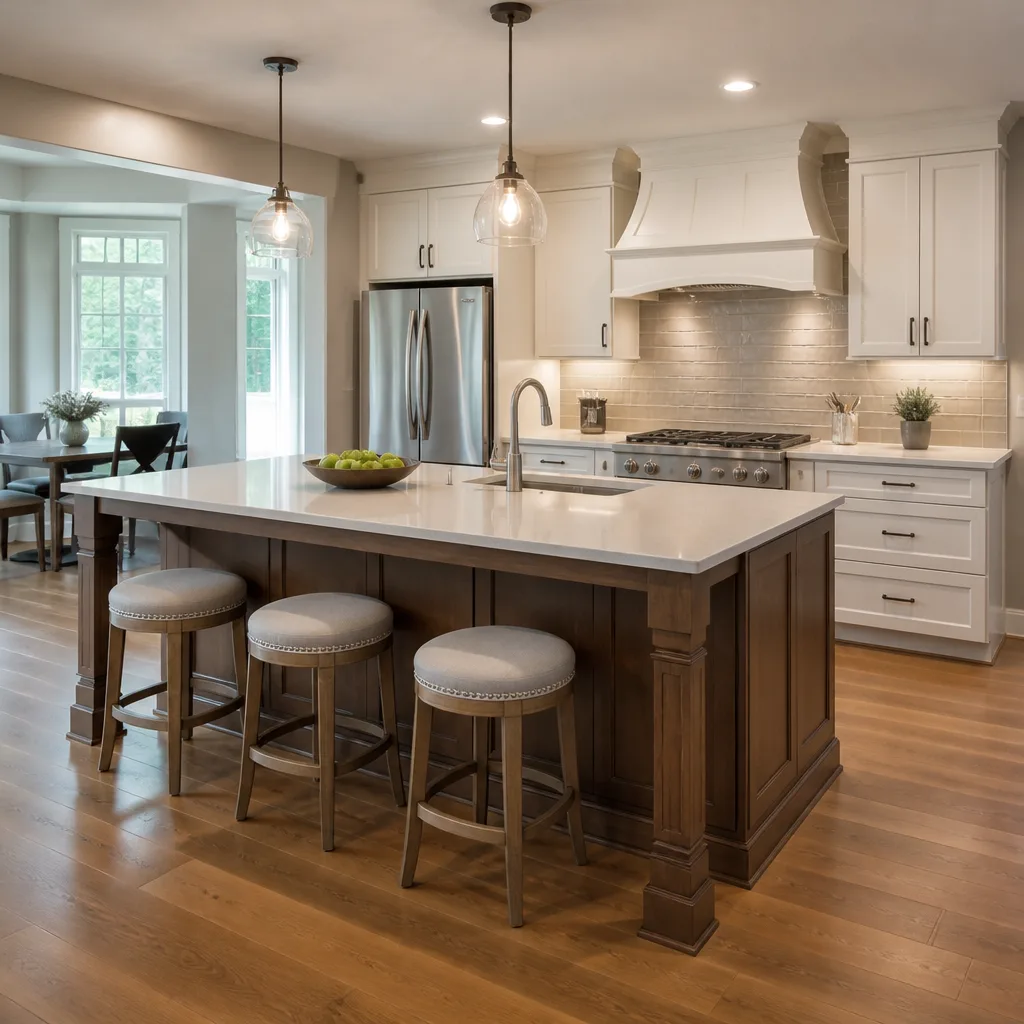 Kitchen remodeling
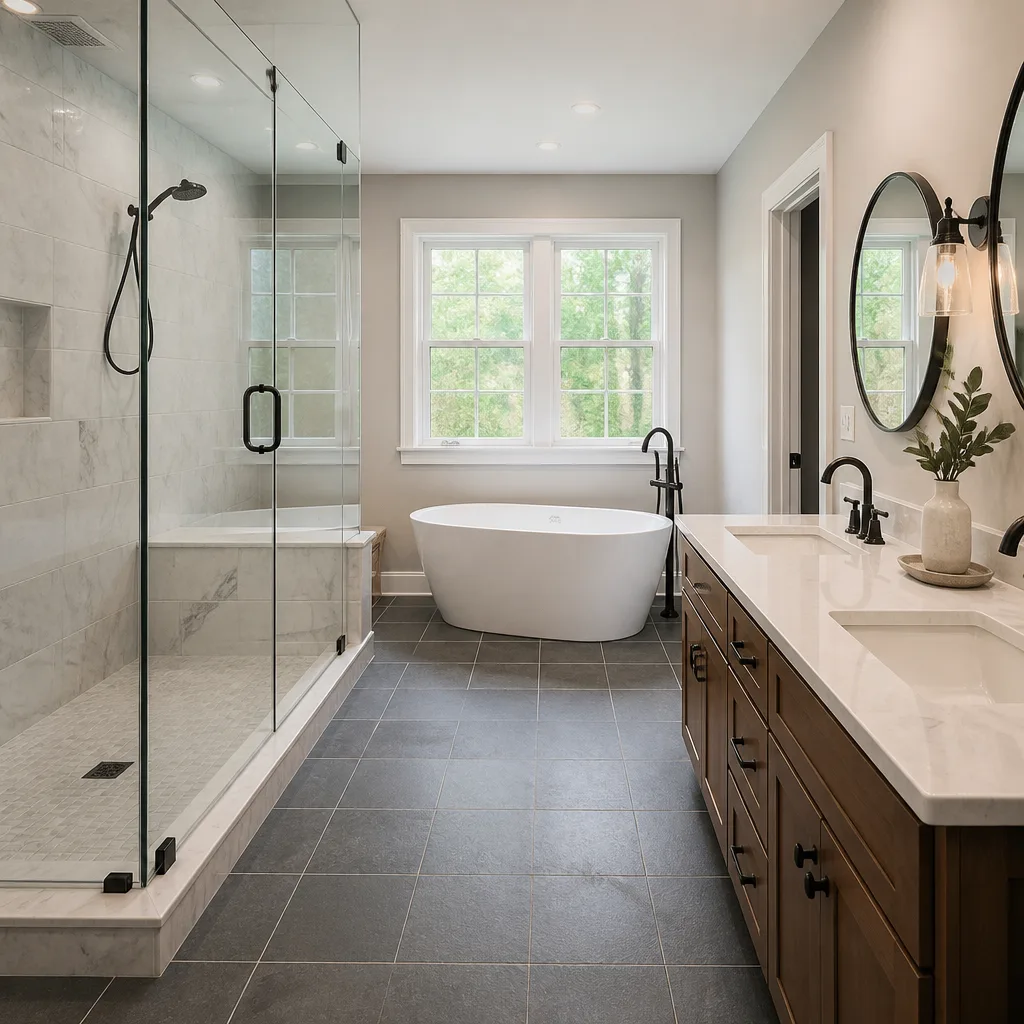 Bathroom remodeling
 Roofing
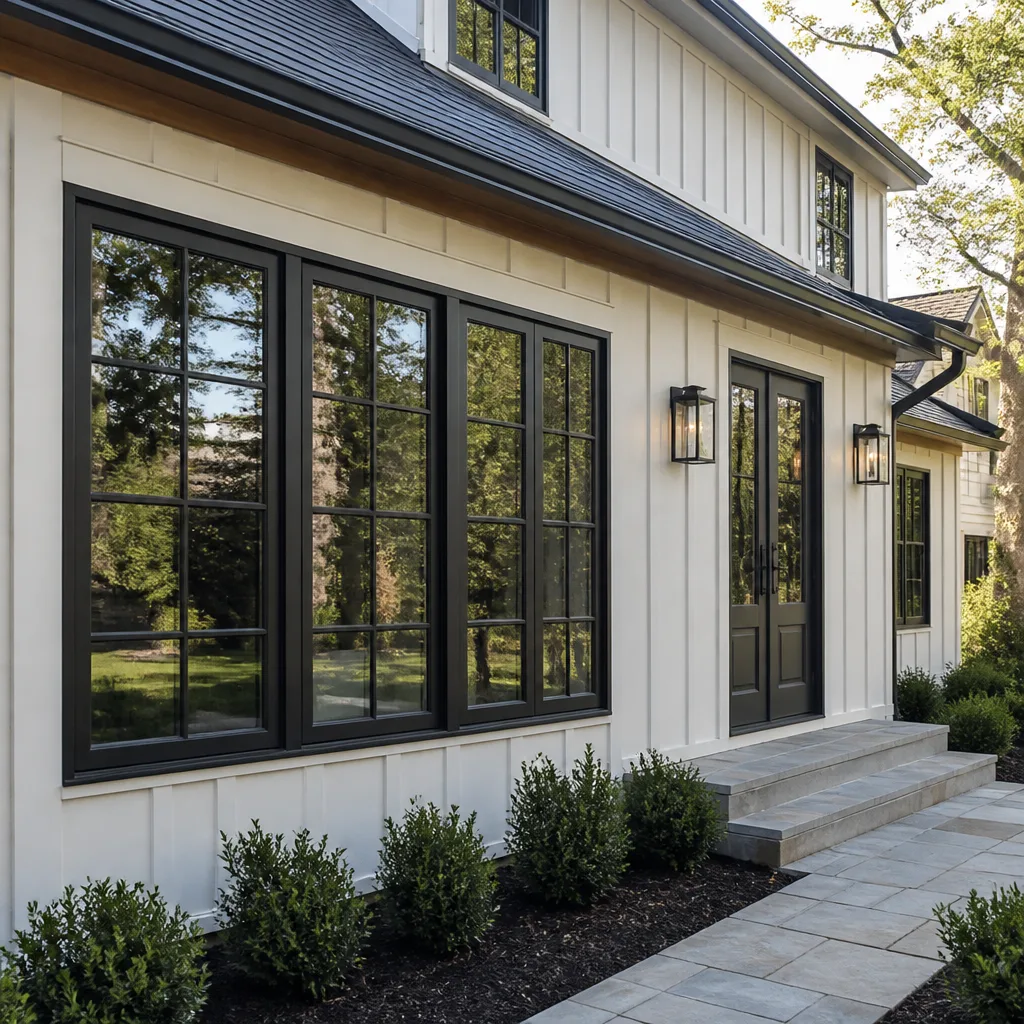 Windows & doors
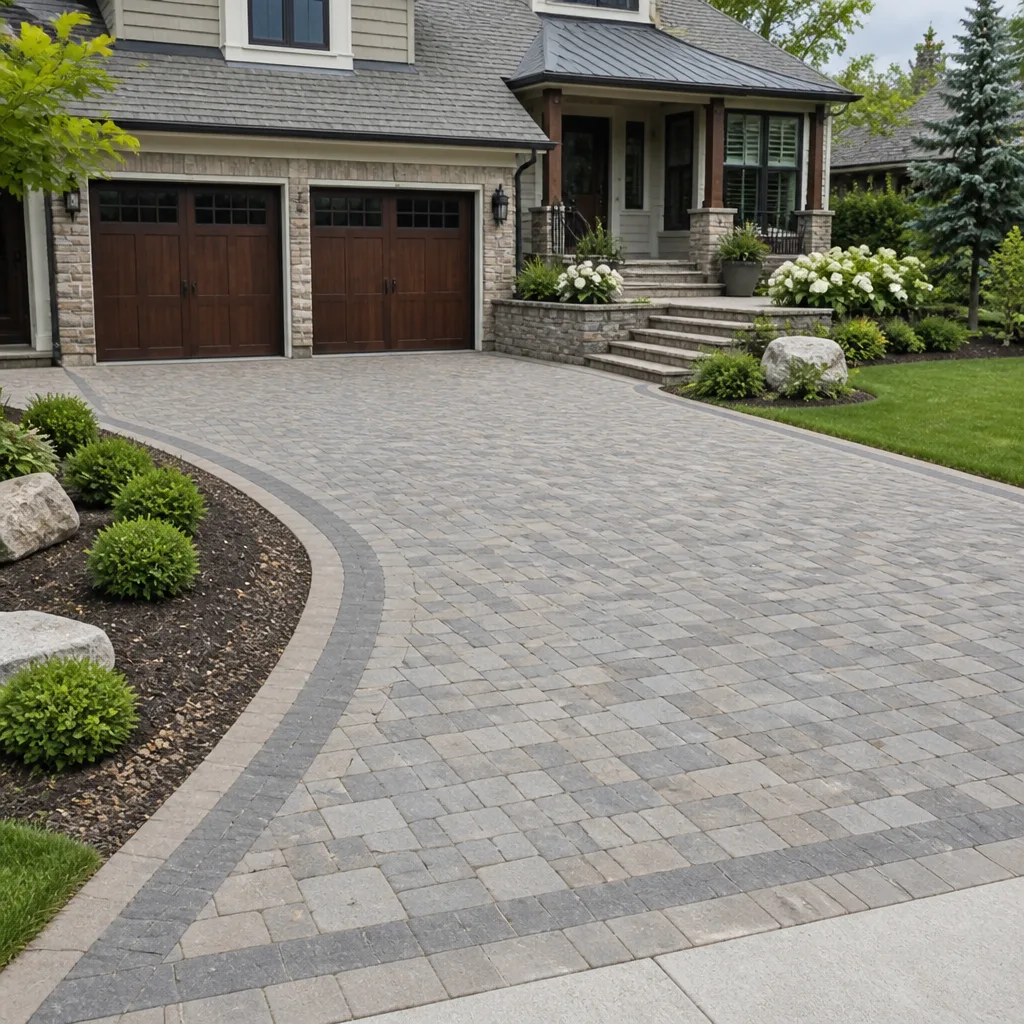 Driveway & pavers
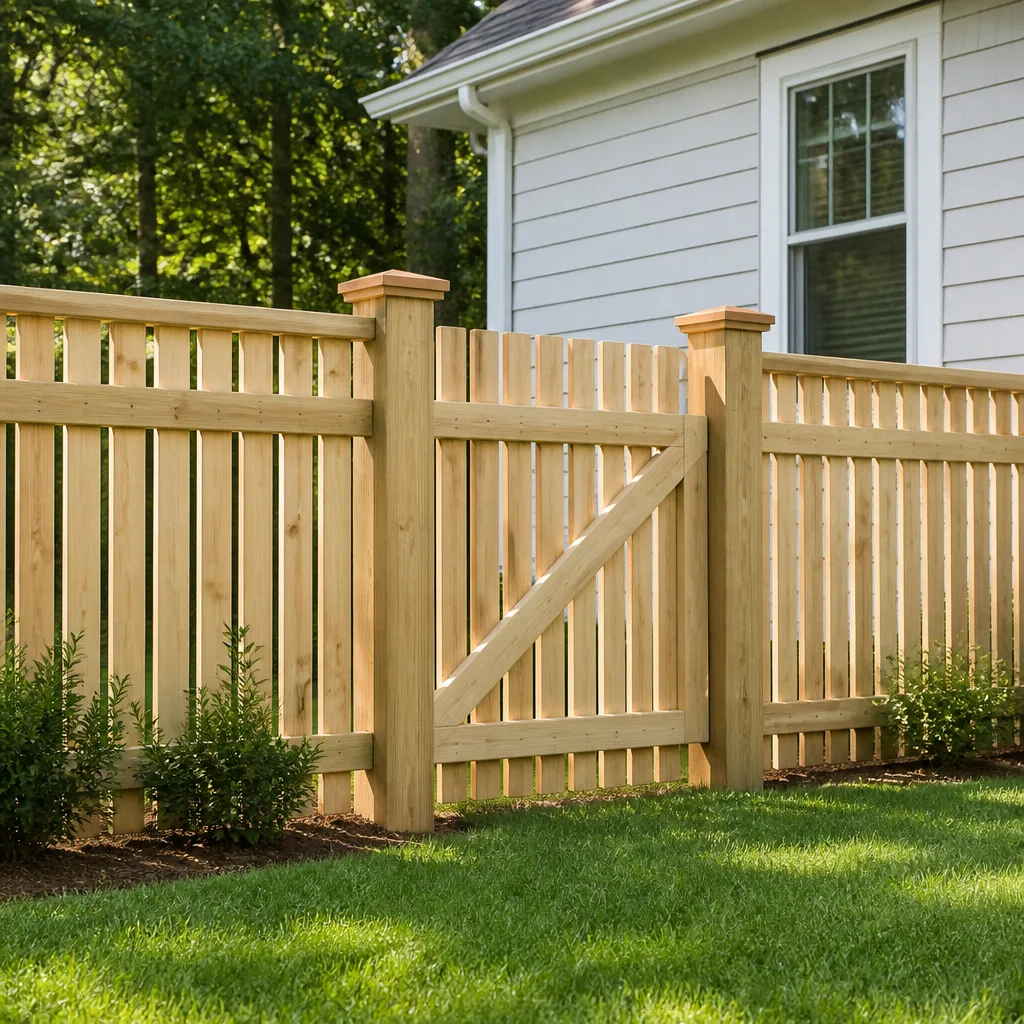 Fence
Free written scope consultation - allowances, timeline, and change-order rules on paper before a single trade is scheduled
General Contractor Maintenance Checklist for Pacifica Homeowners
The average Pacifica home takes on more than 23 inches of rain each year, and almost none of it falls straight down. Coastal winds drive that moisture sideways into window frames, siding laps, and roof flashings, which is why a maintenance schedule written for a generic California house will quietly let yours rot. In Pacifica, manufacturer timelines for sealants and coatings are optimistic by roughly half, and the difference between a $400 repair and a $14,000 replacement usually comes down to whether someone looked at the right thing in the right month. This checklist is built for the marine layer, the salt, and the fog that never really leaves Pedro Point or Sharp Park, not for a theoretical house in a drier zip code.
Quick Answer
A Pacifica home maintenance checklist should be built around moisture intrusion and salt-driven corrosion, not generic seasonal chores. The highest-priority checks are roof fastener and flashing condition, window and door perimeter seals, siding and trim paint integrity at lap joints, crawl space humidity levels, and deck or fence hardware corrosion. Most of these need attention every 4 to 6 months in Pacifica’s exposure conditions, and several require a general contractor in Pacifica who knows which failures are repairable and which have already become structural.
Styles & brands we work with
Table of Contents
- Siding and Trim: The Marine-Layer Inspection Cycle
- Roof Fasteners and Flashing: Salt-Air Corrosion Checks
- Crawl Space and Subfloor Moisture Monitoring
- Window and Door Perimeter Seals
- Deck and Fence Hardware: What Actually Holds Up Here
- Building a Contractor Relationship Before You Need One
- A Seasonal Maintenance Calendar for Pacifica
- Common Mistakes to Avoid
Siding and Trim: The Marine-Layer Inspection Cycle
In most of California, siding inspection is an annual task. In Pacifica, that schedule is not aggressive enough. The marine layer saturates wood and fiber-cement surfaces for hours at a time, then coastal sun dries them rapidly. That wet-dry cycling is what causes paint to crack at lap joints and caulk to separate from trim, and it happens faster on west-facing elevations and any wall that never fully dries between fog cycles.
We recommend inspecting siding and trim every 4 months on homes west of Highway 1 and every 6 months east of it. The difference is not cosmetic. Once moisture penetrates behind siding, Pacifica’s ambient humidity means the wall cavity dries very slowly, so a small paint failure becomes fungal growth and substrate swelling within a single winter.
Walk the perimeter with this sequence and you will catch most failures while they are still surface-level:
- Start at the southwest corner of the home, since that elevation receives the most driven rain in Pacifica.
- Examine every horizontal lap joint for cracked paint that follows the seam. Hairline cracks that form a continuous line are entry points for water.
- Check where siding meets window trim, door trim, and corner boards. Caulk separation here is the single most common intrusion point we see on Sharp Park and Rockaway Beach homes.
- Tap gently along the bottom 12 inches of siding with a screwdriver handle. A dull thud instead of a sharp tap means water has been sitting in the substrate.
- Look for staining below butt joints, especially on the windward faces. Staining above the joint is cosmetic. Staining below means water has traveled through the wall.
For homes with James Hardie fiber-cement siding, the material itself will not rot, but the underlying sheathing will if water gets behind the planks. The fix is typically a repaint of affected elevations with a high-solid acrylic applied to the manufacturer’s dry-film thickness spec, plus replacement of failed caulk with a marine-grade sealant. A home remodeling contractor in Pacifica can assess whether the existing siding is still serviceable or whether the exposure has reached the sheathing.
Roof Fasteners and Flashing: Salt-Air Corrosion Checks
Roofs in Pacifica fail differently than roofs inland. The shingles or tiles may look fine for years while the fasteners that hold them and the flashings that protect valleys, chimneys, and penetrations corrode from salt exposure. By the time a leak appears inside the house, the roof system has usually been compromised for a full season or more.
You do not need to climb the roof to perform a meaningful inspection, and for most homeowners, staying off the roof is the right call. From the ground and from inside the attic, check these indicators:
- Rust staining below flashings: Look for orange or brown streaks running downward from chimney bases, vent pipes, and roof-to-wall intersections. This staining means the galvanized coating on the flashing is failing and the steel underneath is oxidizing.
- Granule accumulation in gutters: If you are cleaning gutters and find an unusual amount of shingle granules along the lower edges of the roofline, wind-driven rain is eroding the shingle surface faster than typical Los Angeles or San Jose wear rates.
- Loose or raised shingle tabs on the windward slopes: Pacifica’s sustained coastal winds work shingles back and forth at the nail points. A shingle that looks lifted or curled at its lower edge may still be attached, but the nail holes have likely enlarged and the fastener is losing grip.
- Attic daylight at ridge and hip lines: On a sunny day, go into the attic and look for visible light at the ridge. If you can see daylight through the peak, water can enter there during wind-driven rain events.
The decision between repair and replacement depends on what you find. Isolated flashing corrosion around one or two penetrations is a repair, and it should be done with stainless or hot-dipped galvanized materials, never standard zinc-coated flashing, which will fail again within a few seasons in Pacifica’s salt air. Multiple failed flashings or widespread fastener corrosion is a signal that the roof has reached the end of its serviceable life in this climate even if the shingles still have visible granule coverage. We have specified and installed GAF, CertainTeed, and Owens Corning roofing systems on Pacifica homes where the original roof was rated for 30 years but reached functional failure at 18 to 22 years because of fastener and flashing corrosion.
Crawl Space and Subfloor Moisture Monitoring
Pacifica’s ambient humidity rarely drops below 70% during summer fog season, and many homes in the Linda Mar and Vallemar neighborhoods sit on soils that hold moisture year-round. A crawl space that stays damp becomes a reservoir that feeds moisture up into floor framing, subfloor, and ultimately the living space. The damage is gradual, odorless at first, and almost never detected without a deliberate inspection.
Install a basic hygrometer in the crawl space and record the reading monthly. Here is the protocol we follow when evaluating Pacifica crawl spaces:
- Target a relative humidity reading below 60% in the crawl space. Readings sustained above 65% will support mold growth on floor joists and subfloor sheathing within one to two seasons.
- Check the vapor barrier, which should be 6-mil or thicker polyethylene, covering the entire ground surface. Overlaps should be at least 12 inches and taped, and the barrier should extend 6 inches up foundation walls.
- Look for standing water or mud after rain events. In Pacifica, water can enter a crawl space through foundation cracks, sill plate gaps, or up through the soil when the water table rises during winter months.
- Inspect the sill plate and the bottom 6 inches of foundation walls for a dark water line, which indicates the crawl space has flooded at some point and the water has left mineral and organic residue behind.
- Check floor joists and the underside of the subfloor for discoloration, white fungal growth, or wood that feels soft under probe pressure. Soft wood in a humid Pacifica crawl space is a structural concern, not a cosmetic one.
If humidity readings are consistently high, the standard fix is a combination of vapor barrier repair or upgrade, sealing of foundation vents where feasible, and installation of a crawl space dehumidifier sized to the square footage. We have also seen Pacifica homes where the real issue is improper drainage at the foundation perimeter, and the water is entering from the outside rather than rising from below. A comprehensive home renovation in Pacifica that includes drainage correction and subfloor repair is sometimes the only way to stop a recurring moisture problem.
Window and Door Perimeter Seals
Caulk and weatherstripping in Pacifica fail at roughly twice the rate manufacturers list in their product documentation. The cause is the same wet-dry cycling that damages siding: sealants stretch when saturated, shrink when they dry, and eventually pull away from the substrate. Once a seal fails, wind-driven rain can carry water into the wall cavity even when the window or door itself is in good condition.
Inspect perimeter seals on a quarterly schedule during the wet season, from November through March. The check itself takes ten minutes:
- Run a finger along the caulk bead where window frames meet siding or stucco. It should feel flexible and continuous. Cracking, hardening, or separation from either surface means the seal has failed.
- Close each door and run your hand around the perimeter from the inside. Any draft indicates a weatherstripping failure that will let driven rain in during storms.
- Examine the exterior side of window sills for water staining, which shows that leakage has already occurred above the sill line.
- Check the bottom corners of exterior doors for softening or discoloration of the threshold area, a sign that water has been pooling there.
When resealing is needed, use a sealant formulated for marine or high-moisture environments. Standard interior-grade acrylic caulk will not survive a single Pacifica winter, and we have seen homeowners redo the same window seals annually because they selected the wrong product. If you are replacing windows rather than resealing, brands like PGT and CGI build impact-rated windows with hardware and seals designed for coastal environments, and Therma-Tru door systems are specified frequently on Pacifica homes because of their resistance to moisture-driven warping.
Deck and Fence Hardware: What Actually Holds Up Here
Standard zinc-plated fasteners and hardware start showing visible corrosion in Pacifica within 12 to 18 months of installation. The combination of salt, fog, and consistent moisture means that a deck or fence built with the same components used in San Bruno or South San Francisco will degrade measurably faster here. The failure mode is predictable: fasteners rust, the wood around them softens, and connections lose structural integrity before the visible surfaces show any problem.
Inspect decks and fences every 6 months with attention to the hardware, not the wood. The following checklist covers the critical points:
- Post-to-beam connections: Look for red or black staining on wood around any metal connector. The staining is corrosion products washing into the wood fibers.
- Ledger board attachment at the house: This is the highest-risk connection on any deck. Check whether the bolts show surface rust, and examine the band where the ledger meets the house for any separation or moisture staining.
- Fence post bases: The 6 inches of fence post at and below grade are the most corrosion-exposed. Probe the base of each post for softness, which can occur even when the post above ground looks solid.
- Gate hinges and latches: Functional hardware is easy to check. If a latch is stiff or a hinge creaks, look for red rust forming around the fasteners. The hardware will fail catastrophically rather than gradually.
- Rail-to-post connectors on fences and deck railings: These small brackets and screws carry more load than most homeowners realize, especially on wind-exposed decks in Pacifica.
For any replacement hardware or fasteners, specify 316 stainless steel or hot-dipped galvanized, never electroplated zinc. The difference in material cost is small relative to the cost of rebuilding a section of deck or fence that failed at its connections. Copperleaf Contractors supplies and installs fence systems from Master Halco and Ameristar, and we specify 316 stainless hardware on every Pacifica fence and deck project because the standard components simply do not hold up in this climate. For hardscape-adjacent deck and patio projects, Belgard and Unilock offer paver systems that connect to deck areas with minimal exposed metal, which reduces long-term corrosion risk.
Building a Contractor Relationship Before You Need One
Most Pacifica homeowners first contact a general contractor when something has already failed: a roof leak has stained the ceiling, a deck rail has pulled loose, or a window has let water into the wall cavity for long enough that sheetrock replacement is required. By that point, the repair is an emergency, and emergency repairs are always more expensive and more disruptive than planned ones.
The most cost-effective maintenance strategy in Pacifica is to establish a relationship with a contractor before anything breaks. Here is what that looks like in practice:
- Have a full-envelope assessment done once: A general contractor walks the entire perimeter of the home and examines roof, siding, windows, doors, deck, fence, and drainage. This produces a baseline of current conditions.
- Get a prioritized list with rough budget ranges: Not every issue needs immediate attention. A good assessment ranks items by urgency and gives you a sense of what each one costs to address now versus later.
- Schedule smaller maintenance work with the same contractor: Recaulking, flashing replacement, hardware upgrades, and seal repairs are small jobs. Doing them through the same contractor builds familiarity with your house’s specific issues.
- Plan larger replacements ahead of the failure cycle: If the assessment says your roof has 3 to 4 years of serviceable life left in Pacifica’s conditions, you can budget for replacement on your timeline rather than reacting to a leak.
The advantage is not just financial, although the financial benefit is real. Deferred maintenance in a salt-air environment compounds quickly, and a $600 flashing repair done in the spring can prevent a $9,000 sheetrock and insulation replacement in the winter. The larger advantage is that a contractor who knows your house can respond more intelligently when something does go wrong, because the history is documented and the baseline is understood. We have seen too many Pacifica homeowners pay for emergency work from whoever was available, and then pay a second time to have that work redone correctly by a contractor who understood coastal construction conditions.
Copperleaf Contractors is a general contractor serving the Bay Area with full-envelope capability across roofing, siding, windows, doors, fencing, hardscaping, and interior systems. We work from the foundation to the roofline, which means a single assessment covers every system on the house rather than requiring separate vendors for separate components.
A Seasonal Maintenance Calendar for Pacifica
Maintenance in Pacifica does not follow a simple spring and fall rhythm. The marine layer, winter storms, and the brief but intense dry season each demand different attention. Here is a month-by-month framework that accounts for how the climate actually behaves here rather than how a generic calendar says it should behave:
November through February (wet season, highest risk): This is the season when water intrusion failures become visible. Check window and door seals monthly during this window, and inspect the crawl space after every major storm, especially in lower-lying areas like Sharp Park and Rockaway Beach where storm drainage can back up. Clean gutters before each storm sequence. Watch for water staining on interior ceilings after periods of wind-driven rain, which is the earliest indicator of a roof flashing failure.
March through May (post-storm assessment, repair window): Once the major storm sequences pass, the damage is evident. This is the time for a full perimeter walk focused on paint failure, caulk separation, and flashing corrosion. Schedule repair work now, before the fog season begins, because sealants and paints cure more reliably in this window than they do during summer fog.
June through August (fog season, humidity peak): The marine layer sits heavy on Pacifica during these months, and crawl space humidity readings typically peak. This is the season for moisture monitoring, not for major exterior paint or sealant work, since long cure times and high humidity compromise adhesion. Check crawl space hygrometer readings weekly. Inspect deck and fence hardware, since warm fog accelerates corrosion on exposed metal.
September through October (dry season, prep window): The brief Pacifica summer is the best window for exterior painting, sealant replacement, and any work requiring dry conditions. This is also the right time to walk the roof or have it inspected, since the dry conditions expose any areas that have been holding moisture. Schedule any deferred roofing, siding, or trim work during this window so the home is sealed before the wet season returns.
Common Mistakes to Avoid
- Using inland maintenance schedules. A checklist written for Redwood City or San Jose under-inspects caulk, flashing, and hardware by half. Pacifica’s exposure conditions require inspection frequencies that sound excessive to homeowners from drier climates.
- Ignoring fastener corrosion until wood fails. Deck and fence structures in Pacifica usually fail at the connections, not in the wood itself. Replacing hardware before the surrounding wood softens is a small job. Waiting until the post sways is a rebuild.
- Repainting over failed caulk without resealing. Paint covers cracks visually but does not restore the water barrier. The seal must be addressed before the repaint, or the failure recurs within the same season.
- Using standard zinc fasteners for replacements. Zinc-plated hardware is not rated for Pacifica’s salt-air exposure and will begin corroding within a year. Specify 316 stainless or hot-dipped galvanized for any exterior hardware replacement.
- Sealing a crawl space without addressing drainage first. A vapor barrier cannot fix water that enters through the foundation perimeter. The drainage issue must be corrected first, or the moisture problem simply moves to a new location.
- Waiting for a leak to inspect the roof. By the time water reaches the interior, the roof system has been failing for months or years. Ground-level and attic inspections catch flashing and fastener issues long before they become interior damage.
- Treating each system as a separate project. Roof, siding, windows, and drainage all interact in a coastal home. A leak that looks like a window problem may actually be a roof flashing failure. Homes are better served by one assessment that looks at the entire envelope as a connected system.
See the difference
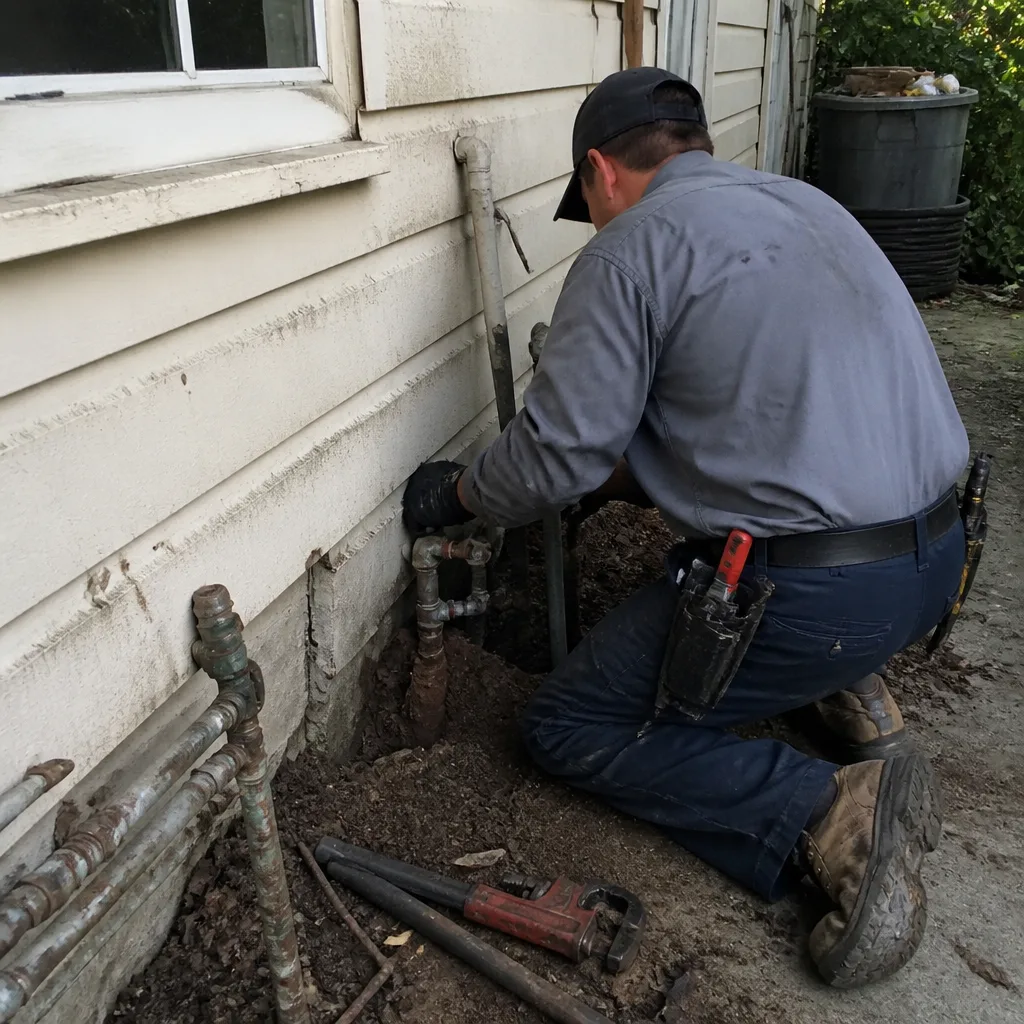 Before
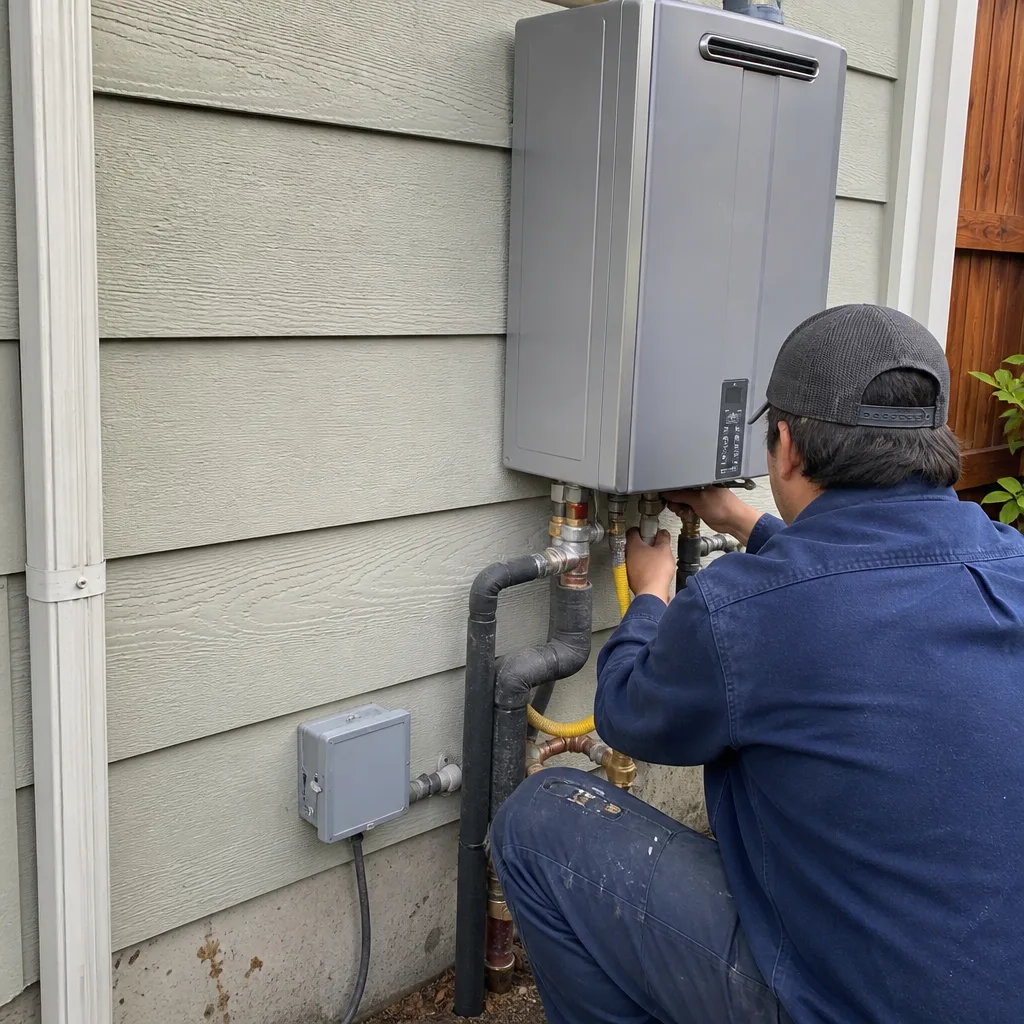 After
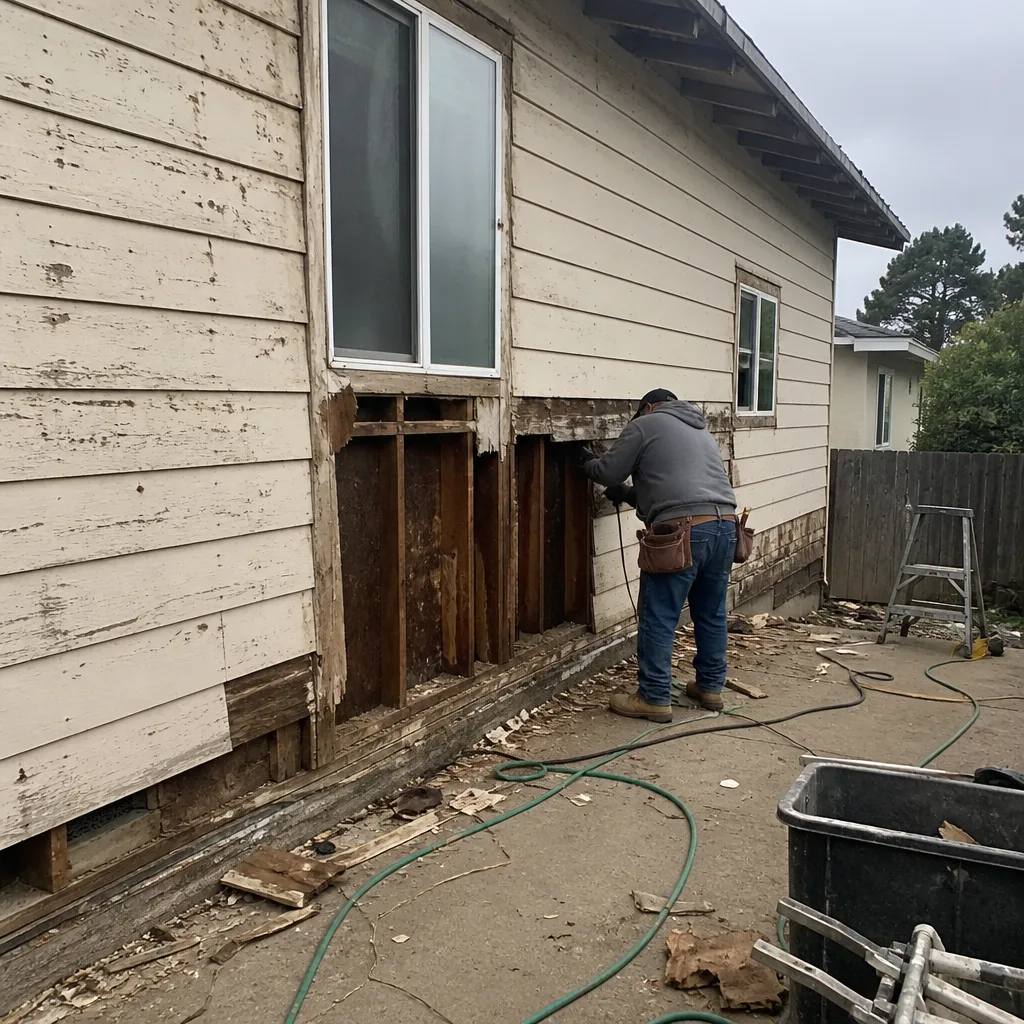 Before
 After
 Before
 After
When to Call a Professional
Several conditions on a Pacifica home warrant professional assessment sooner rather than later. If you find water staining on interior ceilings or walls that expands after rain, the leak source is probably not where the staining appears, and locating the actual entry point requires experience with how water moves through coastal wall and roof assemblies. If crawl space humidity remains above 65% after correcting drainage and vapor barrier issues, the moisture source has not been identified and structural framing damage becomes a real possibility. If multiple flashings show corrosion staining, the roof system is approaching failure even if the shingles look viable. If a deck ledger board shows any separation from the house or any rust staining around bolts, the deck safety margin is compromised and should be examined before use. Soft wood at fence post bases or sagging rails indicates structural decay that a scab repair will not fix. Copperleaf Contractors offers free estimates in Pacifica – call (833) 589-8173.
Frequently Asked Questions
Inspect window and door seals monthly during the wet season from November through March, siding and trim every 4 to 6 months, deck and fence hardware every 6 months, and the crawl space monthly during fog season and after every major winter storm. Full roof and envelope assessments should happen annually, ideally in September or October before the wet season begins.
Pacifica’s marine layer saturates sealants with moisture for hours at a time, then dry air and sun shrink them back, and the repeated cycle causes cracking and separation much faster than manufacturer timelines predict. Wind-driven rain then enters through the failed seals, compounding the problem. Call (833) 589-8173 for a full perimeter seal assessment.
Yes, for any hardware that will be exposed to Pacifica’s salt air, specify 316 stainless steel or hot-dipped galvanized, never standard electroplated zinc. Standard zinc coatings begin failing visibly within 12 to 18 months here, and the wood around corroding fasteners softens quickly, leading to structural connection failure.
Install a hygrometer and take weekly readings for a month. If humidity stays below 60% and you have no standing water or dark water lines on the foundation, the space is likely managing moisture adequately. If readings remain above 65% or you find water after storms, the problem requires both drainage correction and vapor barrier upgrade, possibly with a dehumidifier.
No, in Pacifica the caulk is the actual water barrier, and paint is only a surface treatment over it. Failed caulk behind fresh paint lets water into the wall cavity, and the new paint hides the problem until it has caused real damage. Always reseal before repainting, and use a marine-grade sealant rated for coastal applications.
Rust staining below flashings means the galvanized coating on the metal has failed and the steel underneath is oxidizing. Isolated staining around one or two penetrations is repairable with replacement flashing in stainless or hot-dipped material. Staining in multiple locations signals systemic corrosion and likely warrants a full roof assessment. Estimates are free – call (833) 589-8173.
The Bottom Line
Maintaining a Pacifica home means inspecting more frequently and specifying better materials than homeowners in drier parts of the Bay Area. The salt air, the marine layer, and the sideways rain combine to attack seals, fasteners, and flashings in ways that standard maintenance schedules do not account for. Home remodeling in Pacifica should always spec coastal-grade hardware and marine-grade sealants, and home renovation projects in Pacifica should address drainage and envelope issues as a connected system, not as isolated components. A contractor who knows these conditions from daily exposure is an asset before, during, and after any project on your home.
Copperleaf Contractors offers free estimates in Pacifica. Reach us at (833) 589-8173 to schedule a full-envelope assessment or discuss any maintenance concern you have identified. One contractor, every trade, from the foundation to the roofline.
Written by the team at Copperleaf Contractors, serving Pacifica since 2017.